Vision Correction Specialist · CertLRS · FWCRS · Colchester, Essex
Private Cataract Surgery in Essex
Your optician has referred you for cataract surgery. Before you accept the standard pathway, it is worth knowing that private and NHS cataract surgery are not the same — and that the surgeon you choose, and the lens they implant, will determine your vision for the rest of your life.
Mr Hatch Mukherjee is a vision correction specialist — a surgeon whose entire focus is on what you can see after the operation, not simply on removing a cloudy lens.
Professional memberships, fellowships & leadership roles


Your optician has found a cataract
Private and NHS cataract surgery are not the same.
NHS cataract surgery is safe — but it offers a single standard lens, leaves most patients still needing reading glasses, and can mean months on a waiting list. Private surgery opens a very different conversation about your vision.
NHS PATHWAY
- Standard monofocal lens only
- Reading glasses still needed
- Astigmatism left uncorrected
- Months on a waiting list
- Team-based, not consultant-led
THE VISION SURGEON
- Full range of premium IOL lenses
- Spectacle freedom possible
- Astigmatism corrected with toric lens
- Surgery within weeks
- Same consultant throughout
No obligation · Colchester, Essex
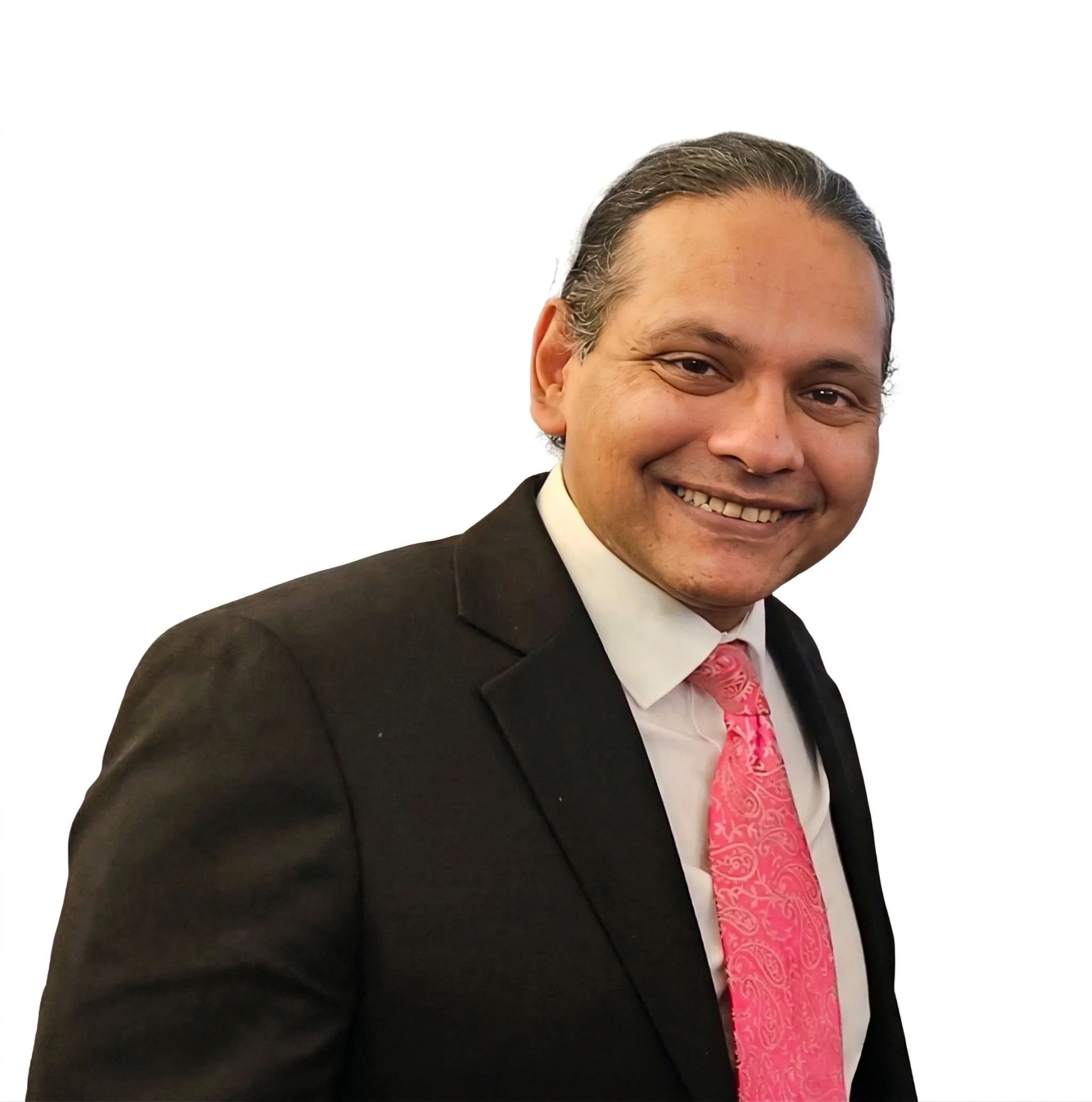
Premium lenses need a vision correction specialist
Most cataract surgeons are trained to remove cataracts safely. That is important — but it is only part of the picture. A vision correction specialist plans the entire operation around what you will be able to see without glasses afterwards. The choice of lens, the precision of the measurements, the accuracy of the implant — these are the things that determine whether you still need glasses in five years' time.
Mr Mukherjee holds the FWCRS (Fellow of the World College of Refractive Surgery) — the highest international credential in vision correction surgery — alongside a dedicated Refractive Fellowship and CertLRS in laser eye surgery. Very few surgeons outside major London centres hold all three.
Focused on what you see, not just what comes out
Most surgeons ask: did the operation go well? Mr Mukherjee asks: how clearly can you see without glasses? That difference in focus changes every decision made in theatre.
Precise planning for your eyes
Advanced measurements and biometry determine the exact lens power for your individual eye — not a standard calculation applied to everyone.
Laser precision
Femtosecond laser replaces the most delicate manual steps of surgery with computer-guided accuracy — particularly important when implanting premium lenses.
A specialist in glasses-free vision
Mr Mukherjee also performs laser eye surgery — so if a small prescription remains after your cataract operation, he can refine it. Most cataract surgeons simply cannot offer this.
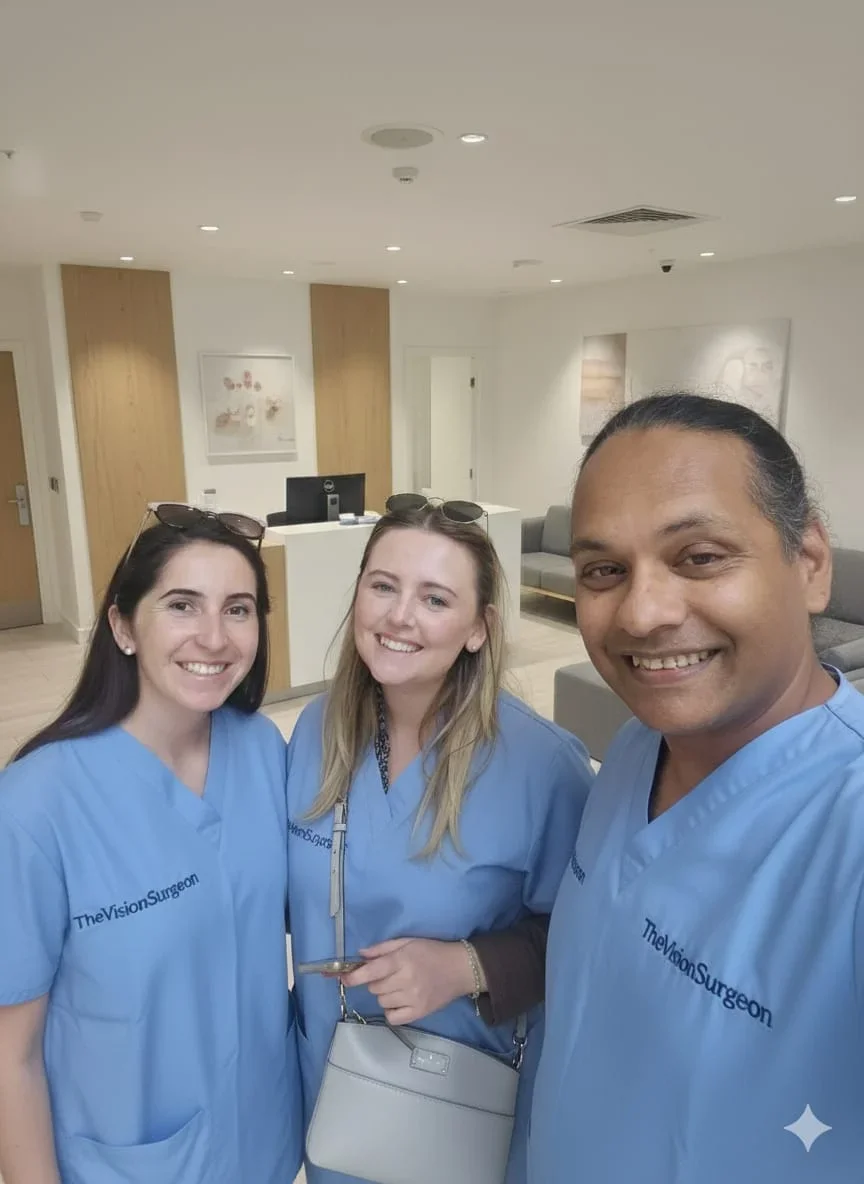
Same consultant from first appointment through to follow-up
Lens options
The lens you choose determines your vision for life
This is the decision the NHS makes for you — a single standard lens, one size fits all. Privately, it becomes a conversation. Which lens suits your eyes, your job, your hobbies, whether you drive at night, whether you spend hours at a screen. Mr Mukherjee works with the full range of premium lens technologies — trifocal, EDOF, toric, and monofocal — and matches the right option to a detailed assessment of your eyes, your lifestyle, and what you actually want to see clearly. Familiarity with every platform means the recommendation is based on what suits you, not on what is available.
Trifocal & EDOF lenses
Premium lenses that provide clear vision at near, intermediate and distance ranges. Many patients achieve clear vision for reading, screens and driving without glasses at all.
Extended Depth of Focus (EDOF) lenses deliver a broad continuous range of vision — popular with patients who want reduced halos and excellent intermediate vision for computer work.
Toric lenses
If you have astigmatism as well as a cataract, a toric lens corrects both at the same time. The NHS does not routinely offer this — leaving astigmatism uncorrected, and glasses still required even after surgery.
Toric lenses are available in both monofocal and multifocal versions, so astigmatism correction can be combined with spectacle freedom.
Monofocal lenses
A premium monofocal provides excellent distance vision and is the right choice for some patients — those who prefer a single sharp focal point, or whose eyes are not well suited to multifocal optics.
Even here, the choice of which specific lens matters — Mr Mukherjee selects from the full range of premium options, not a single standard lens.
Honest advice · No pressure · No obligation
Only available from a vision correction specialist
When the lens alone isn't enough
Even with careful planning and a premium lens, a small residual prescription can sometimes remain after cataract surgery. For most cataract surgeons, that is the end of the road — glasses are prescribed and the patient lives with the result.
Because Mr Mukherjee is also a fully qualified laser eye surgeon, he can offer laser enhancement after cataract surgery to refine the outcome further. This approach — known as bioptics — means the pursuit of clear, glasses-free vision does not end in the operating theatre. If the result can be improved, the tools are there to do it.
What to expect
Consultation & assessment
You meet Mr Mukherjee directly. He reviews your eyes using advanced biometry and imaging, discusses your vision goals, and recommends the most suitable lens option for your lifestyle and prescription.
Pre-operative preparation
You receive clear written instructions ahead of surgery — including any eye drops to start, what to avoid beforehand, and what to expect on the day. Our team is available to answer any questions.
Surgery
Cataract surgery typically takes 20–30 minutes under local anaesthetic. Mr Mukherjee performs the procedure himself, removing the cloudy lens and replacing it with your chosen implant. Most patients feel no pain and notice improved vision within hours.
Aftercare & follow-up
You are seen the following day and again at one week and one month post-surgery. Mr Mukherjee monitors your recovery personally and remains available throughout your healing period.
Frequently Asked Questions
RELATED TREATMENTS
Not sure laser is right for you?
If laser eye surgery is not suitable — due to a high prescription, thin corneas or other factors — there are excellent alternatives that Mr Mukherjee can discuss at consultation.
Lens Replacement Surgery
The same premium lens approach for patients without cataracts — for those seeking spectacle freedom while their natural lens is still clear.
Laser Eye Surgery
LASIK, TransPRK and SMILE for suitable patients. Also available as an enhancement after cataract or lens surgery.
Pterygium & Corneal Conditions
Specialist management of pterygium and corneal conditions affecting vision and comfort.
Understand your options before you decide
A consultation with Mr Mukherjee gives you a clear, honest picture of what is available for your eyes — whether you have already been referred by your optician or are simply exploring your options.